
The Montessori Approach
A plain-language guide for parents who are new to Montessori: what it is, what happens in the classroom, and what it looks like at Wonder Years.
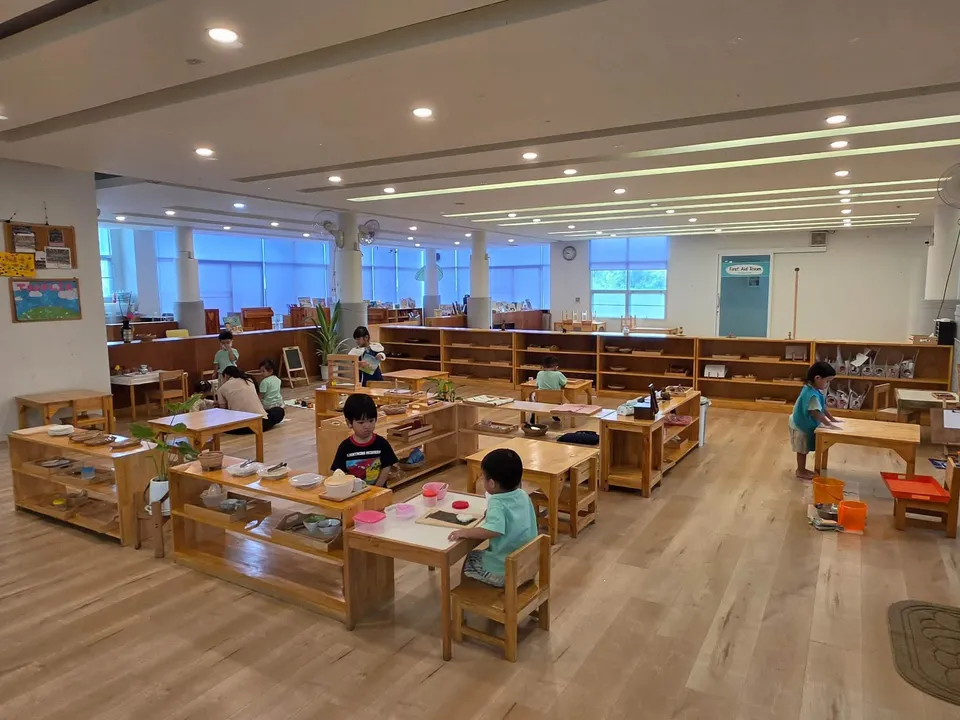
What is Montessori?
Montessori is an approach to education developed by Dr Maria Montessori, an Italian physician, more than a century ago. It is based on careful observation of how children naturally learn: through movement, their senses and real, purposeful work.
In a Montessori classroom children choose activities from a prepared range, work with them for as long as they need, and learn to manage themselves and their work.
The prepared environment
The classroom itself is a teacher. Shelves are low, furniture is child-sized and every material has its own place. Activities are arranged from simple to complex, so children can find their next challenge on their own.
At Wonder Years: A toddler can reach the shelf, take a tray, carry it to a table and return it when finished, without adult help.
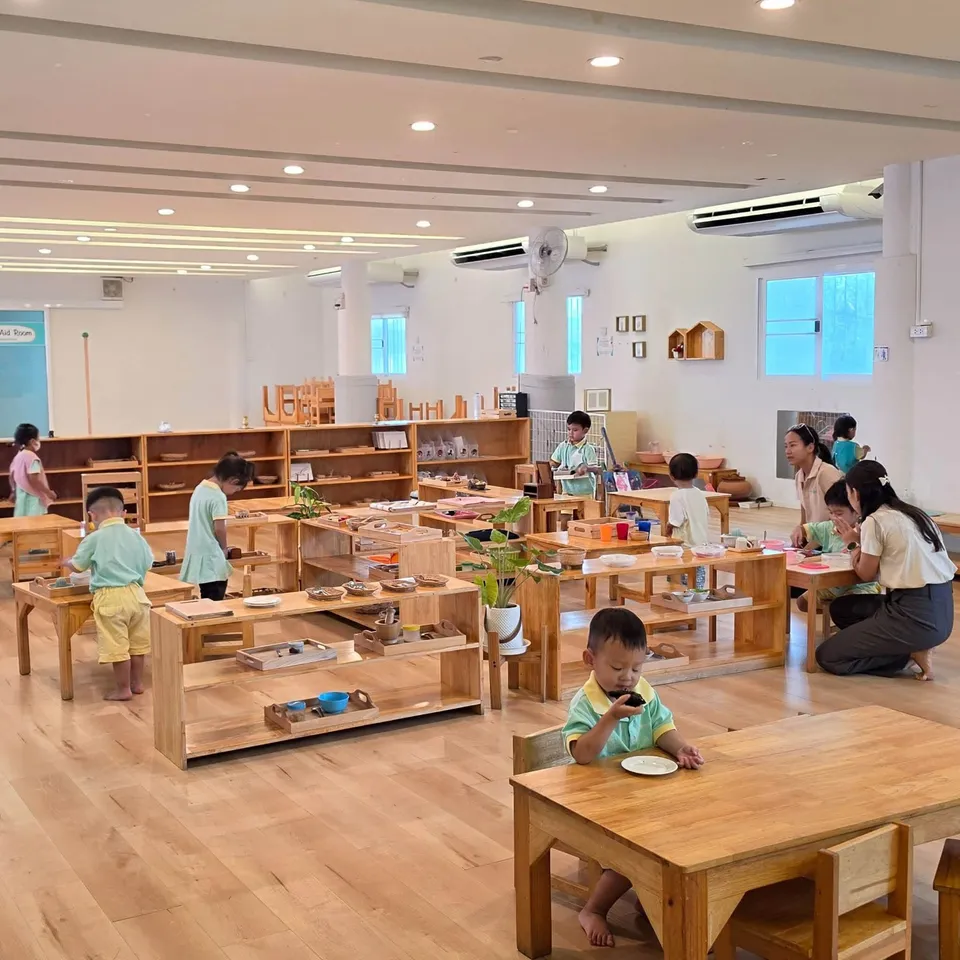
Learning through doing
Children learn best with their hands. Montessori materials make abstract ideas concrete: a child feels the difference between rough and smooth, sees quantities in beads, and traces letters with a finger before writing them.
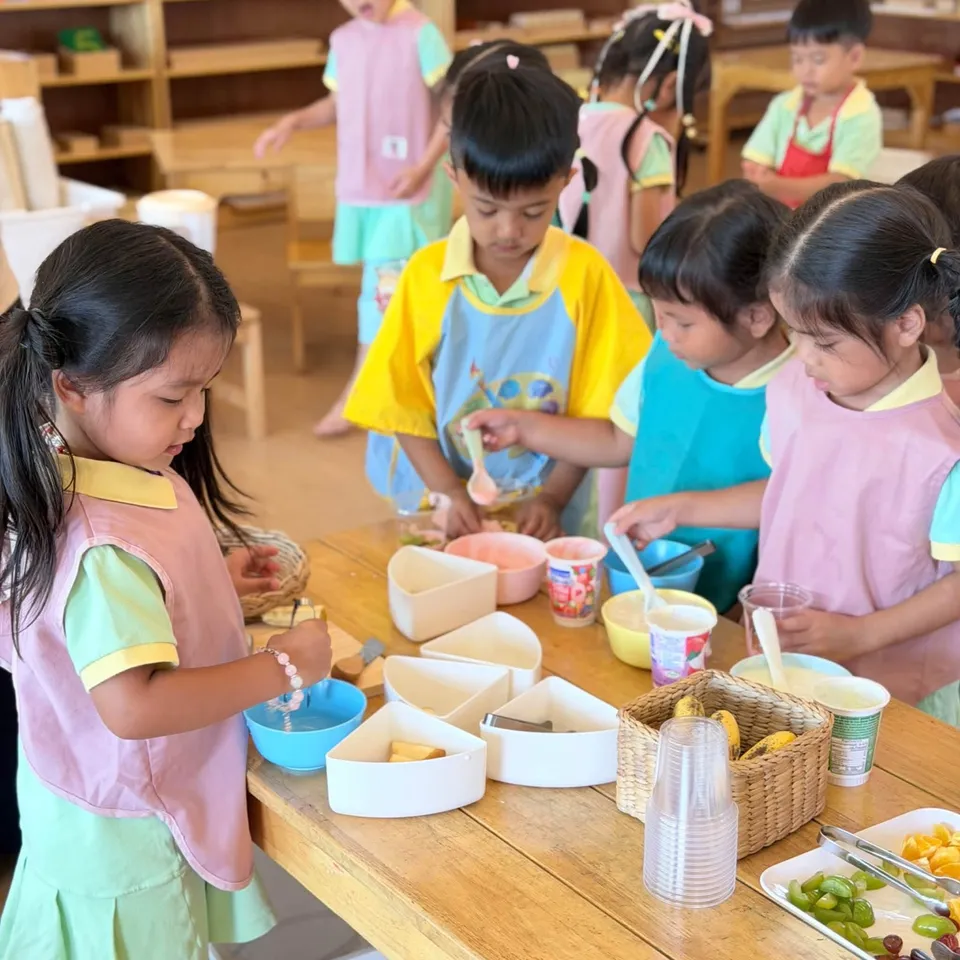
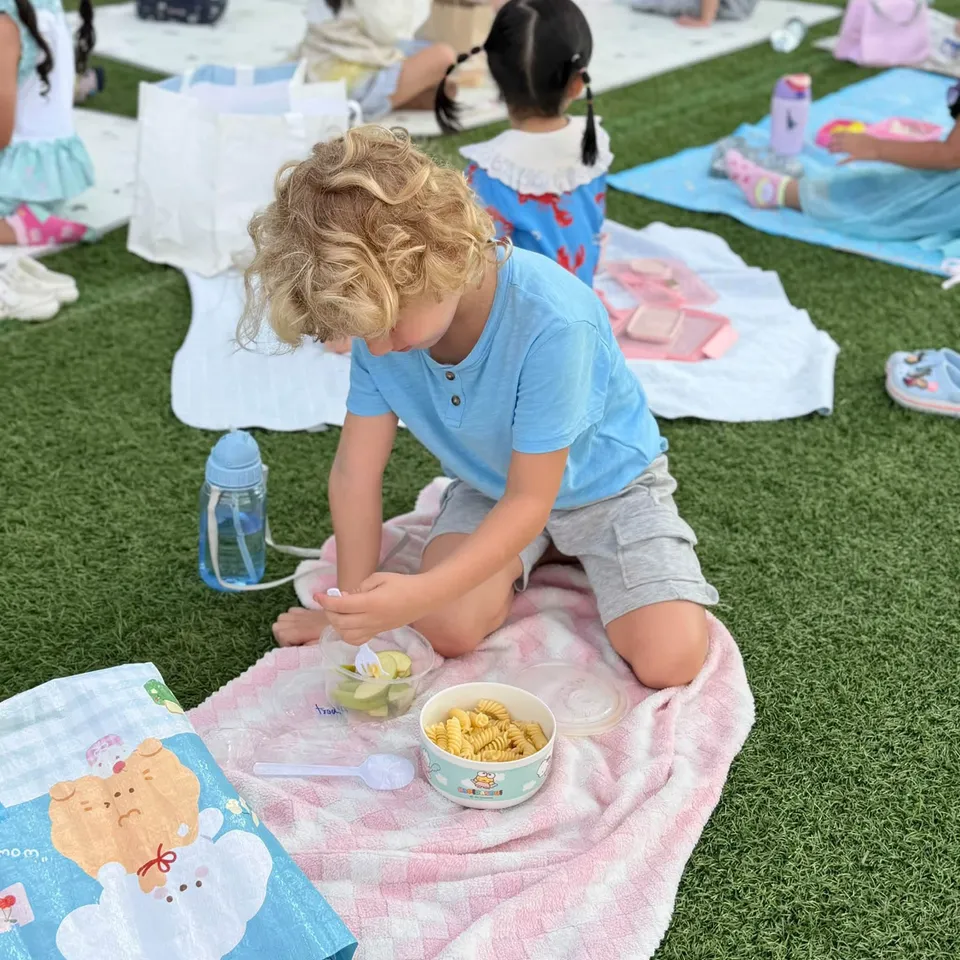
At Wonder Years: Preparing a snack teaches sequencing, fine motor control and care for others, all in one activity.
Independence & self-esteem
When children are trusted to do real things, they discover what they are capable of. Confidence grows from genuine achievement rather than praise alone.
At Wonder Years: Putting on shoes, pouring water, tidying up: each small success says “I can do it myself.”
Freedom within limits
Children are free to choose their work, where to do it and for how long, within clear limits: respect for others, for the materials and for the environment. This balance helps children develop self-discipline from the inside.
At Wonder Years: A child may work on the floor on a mat, but returns the mat when finished so a friend can use the space.
The Montessori guide
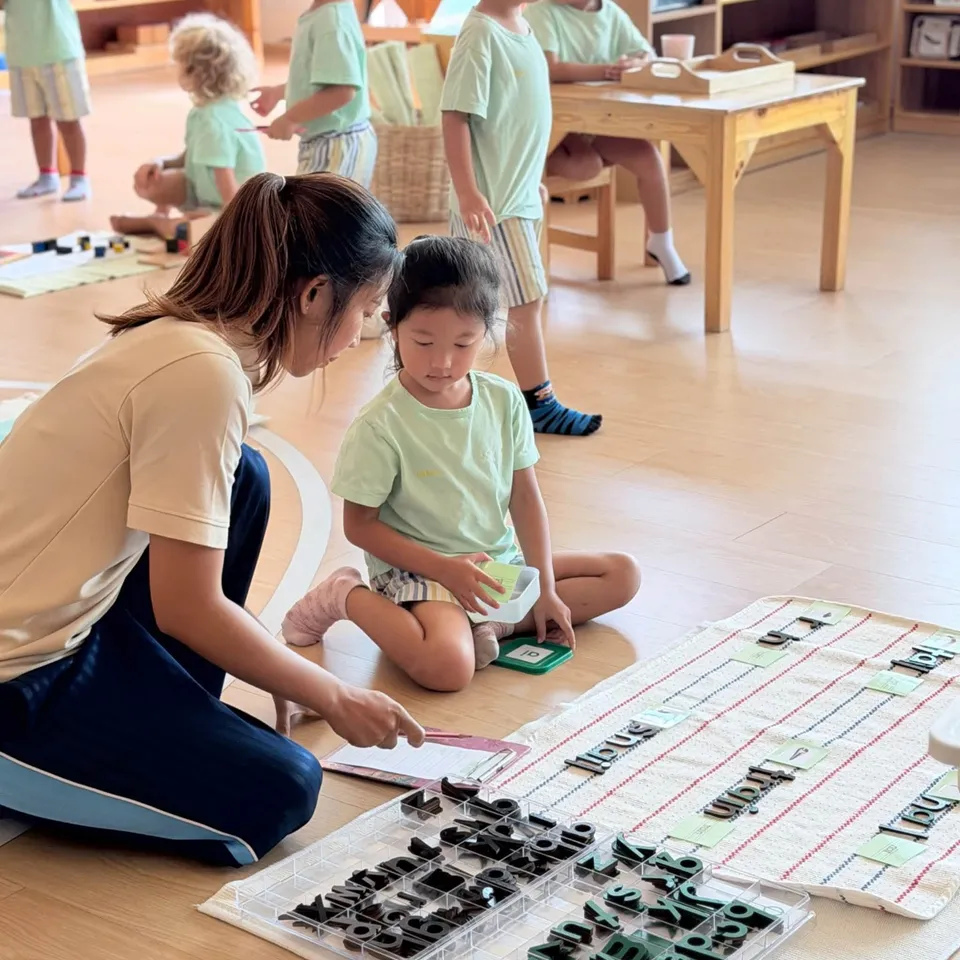
Montessori teachers are often called guides. Rather than teaching the whole class at once, they observe, give short individual or small-group presentations, and then step back. They know each child’s progress and interests and connect them to the right next activity.
Mixed-age learning
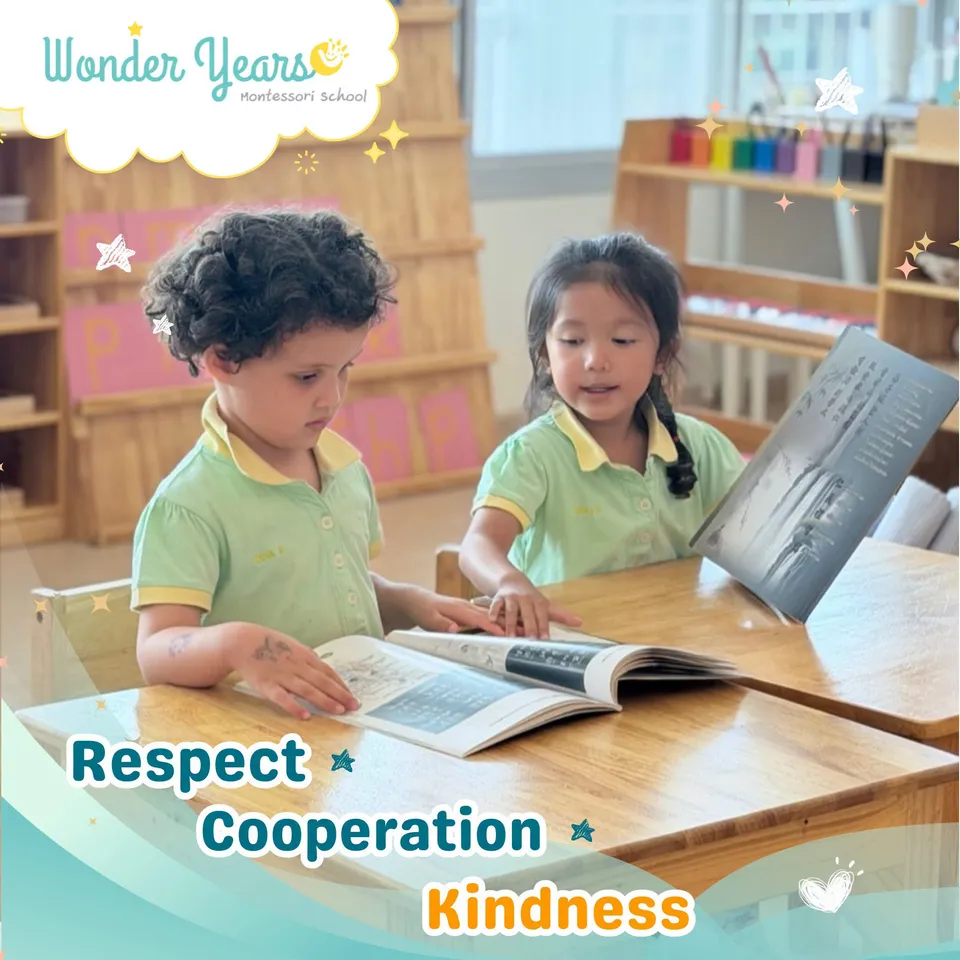
Montessori classes bring together children of different ages. Younger children learn by watching older friends; older children consolidate what they know by helping. Respect, cooperation and kindness grow naturally.
Practical Life
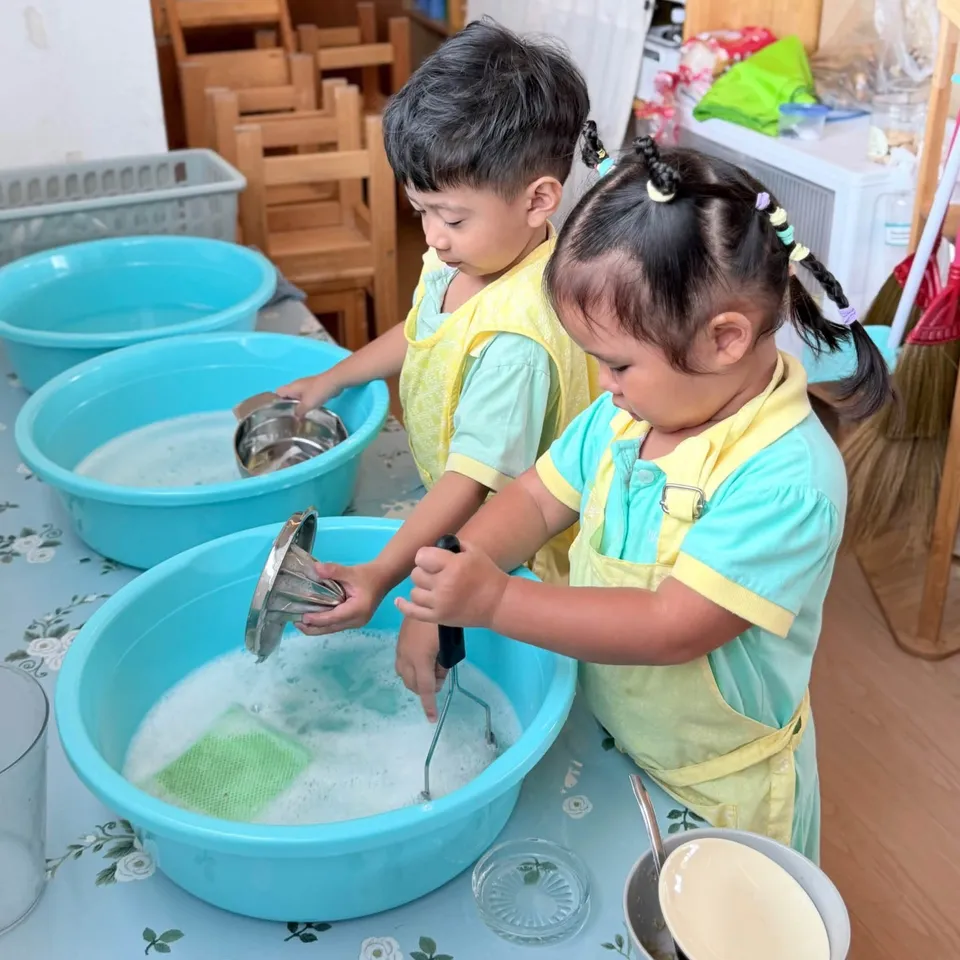
Everyday tasks such as pouring, spooning, washing, sweeping, buttoning and preparing food. They build coordination, concentration, order and independence, the foundation for everything else.
Sensorial
Beautifully made materials help children refine their senses: comparing sizes, colours, shapes, textures, sounds and weights. Sorting and ordering prepare the mind for mathematics and language.
Language
Children build vocabulary through conversation, stories and naming real objects. They learn letter sounds with sandpaper letters, compose words with the moveable alphabet, and move naturally into reading and writing.
Mathematics
Number rods, golden beads and other hands-on materials let children see and feel quantities before working with symbols. Counting, the decimal system and early operations become concrete experiences.
Cultural studies
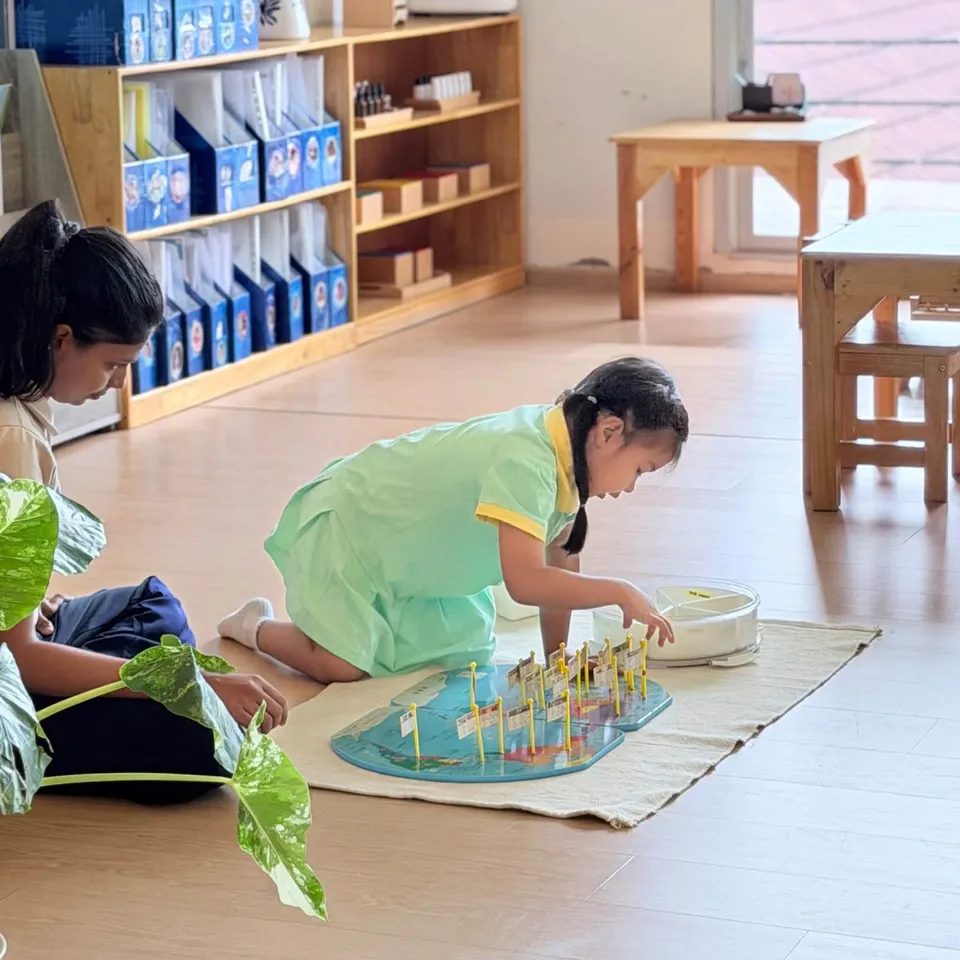
Geography, science, nature, art and music open the wider world. Children explore continents and flags, plants and animals, and celebrate festivals from Thailand, China and around the world.
Montessori in everyday life
Montessori does not stop at the classroom door. You can support it at home with a few simple steps:
- Keep a low hook for their bag and a stool at the sink
- Offer two choices rather than open-ended questions
- Give time to finish, and resist the urge to help too soon
- Invite them to help with real jobs: setting the table, watering plants, sorting laundry
Montessori and traditional classrooms
Both approaches can serve children well. These are the main differences families usually notice.
| Topic | Montessori classroom | Traditional classroom |
|---|---|---|
| Pace | Each child progresses individually when ready. | The class generally moves through topics together. |
| Teacher’s role | Guide who observes and gives individual presentations. | Leads lessons for the whole group. |
| Learning materials | Hands-on, self-correcting materials. | Books, worksheets and teacher demonstration. |
| Choice | Children choose their work within clear limits. | Activities are mostly chosen by the teacher. |
| Age grouping | Mixed ages learn together. | Children usually grouped by single year. |
| Following progress | Ongoing observation and records of each child. | Often includes tests and graded work. |
Every child is different. We are happy to talk through whether Montessori suits your child during a school visit.
See it for yourself
Visit a classroom in action and ask our teachers anything.